Context: The Knowledge Base for AI
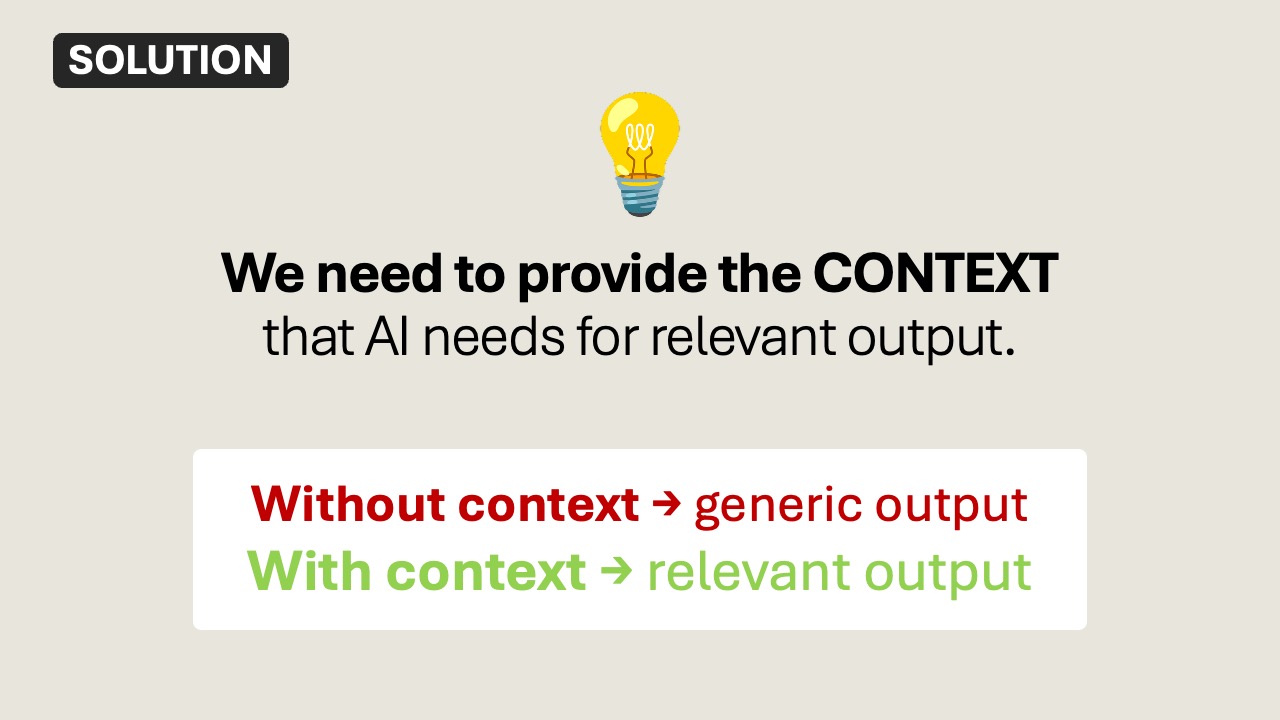
Context is the difference between AI that gives generic answers and AI that tailors answers to your specific situation.
Core Skill
Context management
AI doesn't know your situation. Every chat starts blank: no memory of who you are, what you do, or how your organization works. The people who get good results from AI are the ones who've learned to fill that gap.
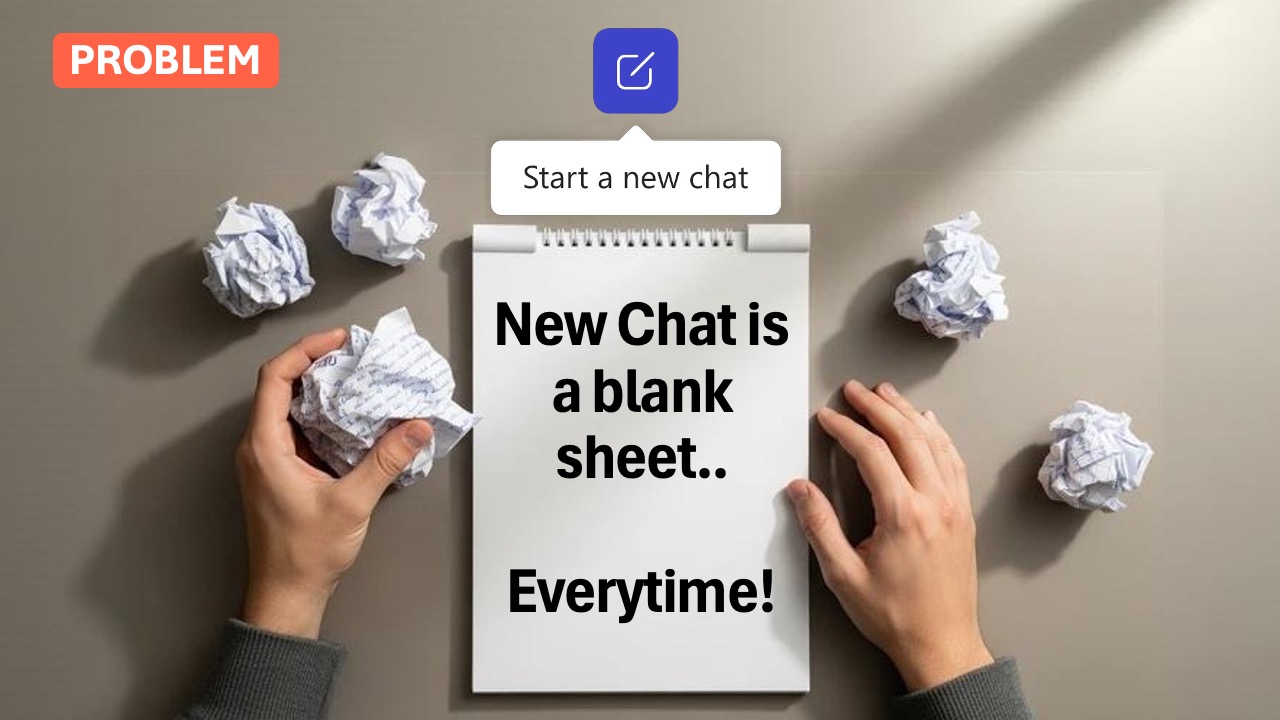
Every chat starts from zero
When you open a new conversation, AI has nothing to work with. No history, no preferences, no knowledge of yesterday's conversation. You start over, every single time.
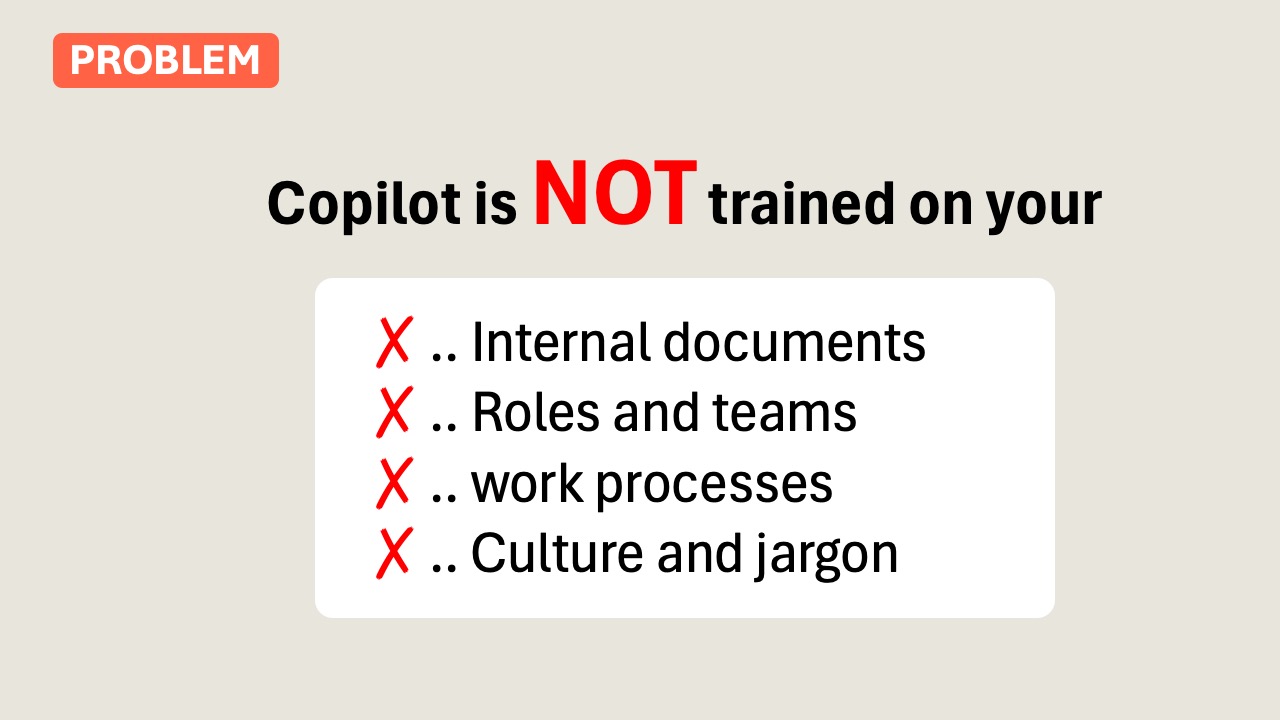
On top of that, AI was never trained on your internal world. It doesn't know your team structure, your reporting templates, or the abbreviations your department uses every day.
Colleague vs. language model
Think about asking a colleague for help versus asking AI. Your colleague already knows the background. AI does not.
| Colleague | Language Model |
|---|---|
| Knows your organization | No memory between sessions |
| Understands your jargon | No knowledge of your situation |
| Familiar with the history | Guesses at meaning |
| Gets implicit expectations | Uses general patterns |
Two sources of information
AI works with exactly two things: what it learned during training, and what you give it right now.
Training data
Billions of words of text up to a cutoff date. This is where its general knowledge of language, facts, and patterns comes from.
What you give it
Your prompt, plus any files or documents you attach. This is the only way AI learns about your specific situation.
Keep in mind
Anything after the training cutoff date is invisible to the model. Your organization, your colleagues, your processes: AI knows none of it unless you spell it out.
The context formula
More specific input produces more relevant output. It comes down to two things:
Task
goal, who, what, why
Background
organization, team, project
Output that fits your work
Start with the task: what do you need? Then add background about your situation. The more specific the background, the more usable the result.
The difference context makes
Prompt
Write a proposal for remote work at our healthcare organization
Result
- Generic American proposal
- Standard terms: "Remote work"
- General office rules
- Outdated regulations
Prompt
Write a proposal for hybrid work for our healthcare organization with 1200 employees, healthcare collective agreement, and 24/7 services across 3 locations.
- Expertise: HR advisor
- Audience: Works council and management
- Focus: Patient safety
- Documents: @Organization.docx
Result
- Specific for healthcare sector
- Collective agreement conditions
- 24/7 continuity safeguards
- Works council language and reasoning
Three tips
Create a context document
Write a document with your organization, team, your role, and key terminology. Save this for reuse via attachments.
Referring to a website?
AI doesn't always read the right info from websites. Copy the relevant text and add it directly to your prompt.
AI has limited memory
Too much context can lead to poor results. Only provide information that's relevant to the specific task.
Context in practice
What does useful context actually look like? Here are some examples:
Team & organization context
Team description, brand guidelines, tone of voice per brand, stakeholder list, approval processes.
Project context
Campaign goals and KPIs, target audience personas, budget and timelines, previous results, competitive analysis.
Role-specific context
For marketers: media mix preferences, channel strategy. For content managers: SEO guidelines, content calendar. For CRM: segmentation criteria, flow templates.
Managing context
Like any conversation, the longer it goes, the harder it is to keep track. AI models have a limit (roughly 75,000 to 150,000 words per session). After that, earlier information starts to fade.
Start with a clean chat
Start new tasks in a new chat. Old context from previous conversations can unintentionally influence your new output.
Be selective with attachments
Only add relevant documents that directly help with your specific task. Not your entire archive: too much context reduces quality.
Split complex tasks
Create multiple focused prompts instead of one long one. This keeps the context clear and improves results per subtask.
Save successful prompts
Copy working prompt+context combinations to a prompt library for reuse.
Summary
- 1. AI has no memory: Every chat starts blank. Always provide the context AI needs.
- 2. Context = quality: The more specific your input, the more relevant the output.
- 3. Build a context library: Create reusable context documents for your organization, team, and projects.
- 4. Be selective: Too much context is just as problematic as too little. Focus on what's relevant.